
Casey Reas — Ex Nihilo
A dual-medium exhibition that functions as a single system, explored through two contexts.

As an artist, Casey Reas is known for deconstructing digital images into their smallest units. For this exhibition’s release notes, we wanted to do the same thing and explain it in parts. Zsofi Valyi-Nagy will start by sharing the artwork. Then I’ll walk you through how we’re releasing the exhibition.
I. The Anatomy of the Image
By Zsofi Valyi-Nagy
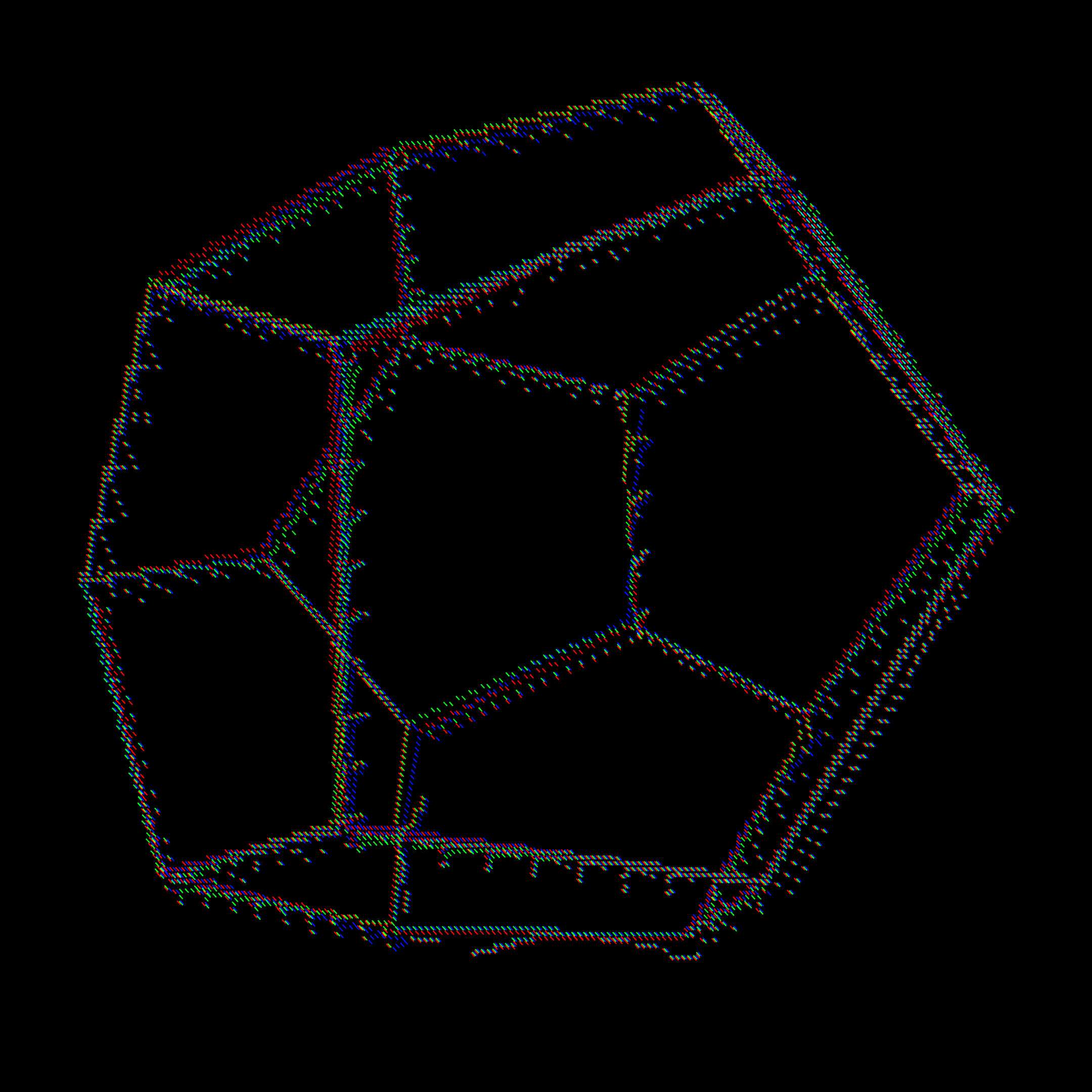
Like an army of ants, specks of red, green, blue, and white crawl across your screen, joining into thin bands that blink, oscillate, and zigzag. As you watch, you might notice recognizable shapes emerging: the edges of a pentagon, then another, and another. We sometimes forget that it’s not just machines that get to search for patterns; it’s in our human nature, too.
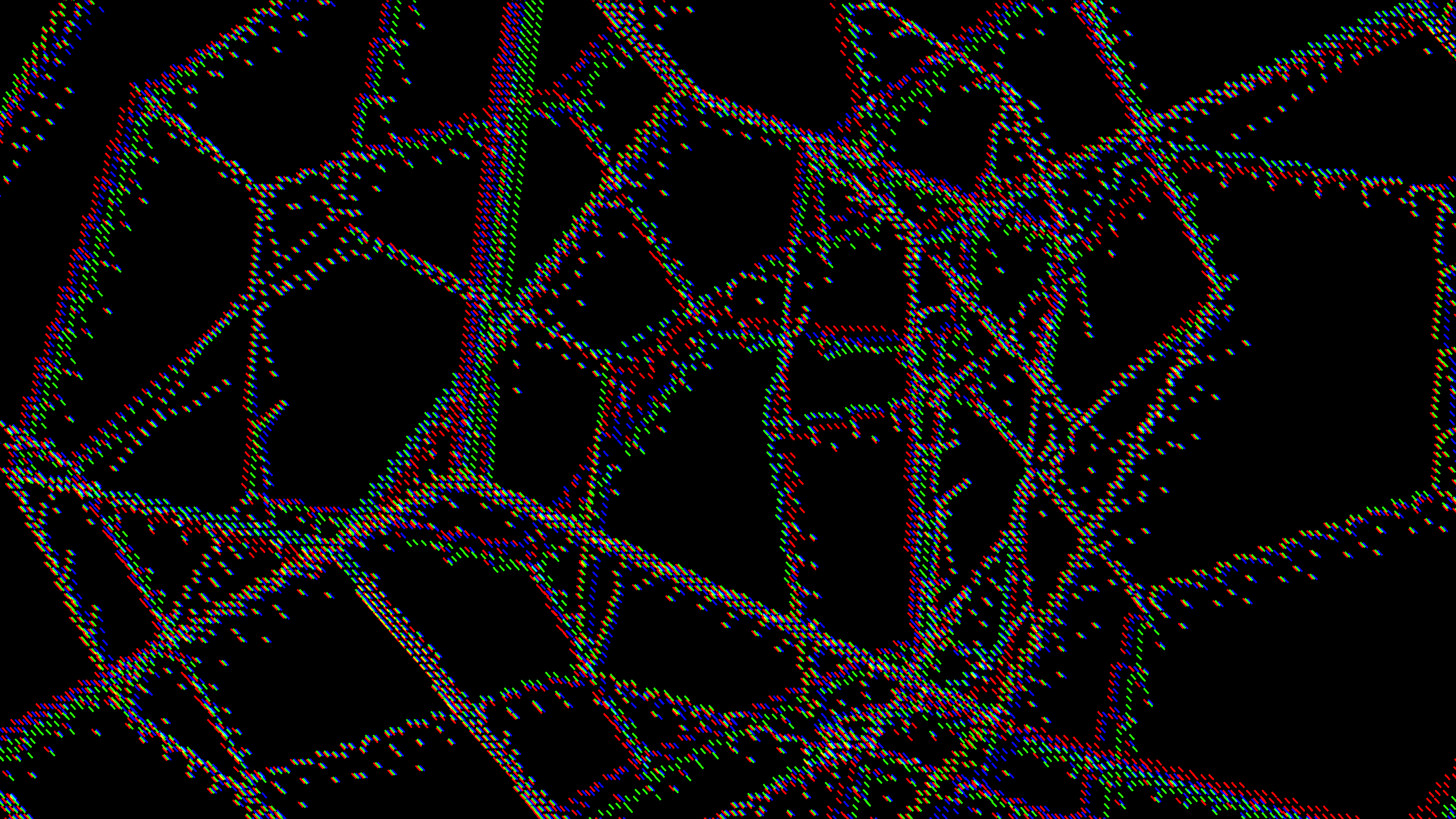
Many of us look at digital images all day, every day, without pausing to think about what we’re really looking at when we flood our eyes with the blue light of the screen. With Ex Nihilo (Cosmos), Casey Reas returns to the genre of still life, which artists have used for centuries to make ordinary objects feel strangely new. Yet unlike his art historical predecessors, Casey’s objects are not plucked from the garden or the dining room table. Instead, the object of his still lifes is the digital image itself, explored through representations of the dodecahedron, one of the five Platonic solids, which he generates ex nihilo—out of nothing—from the mathematical equations of code.
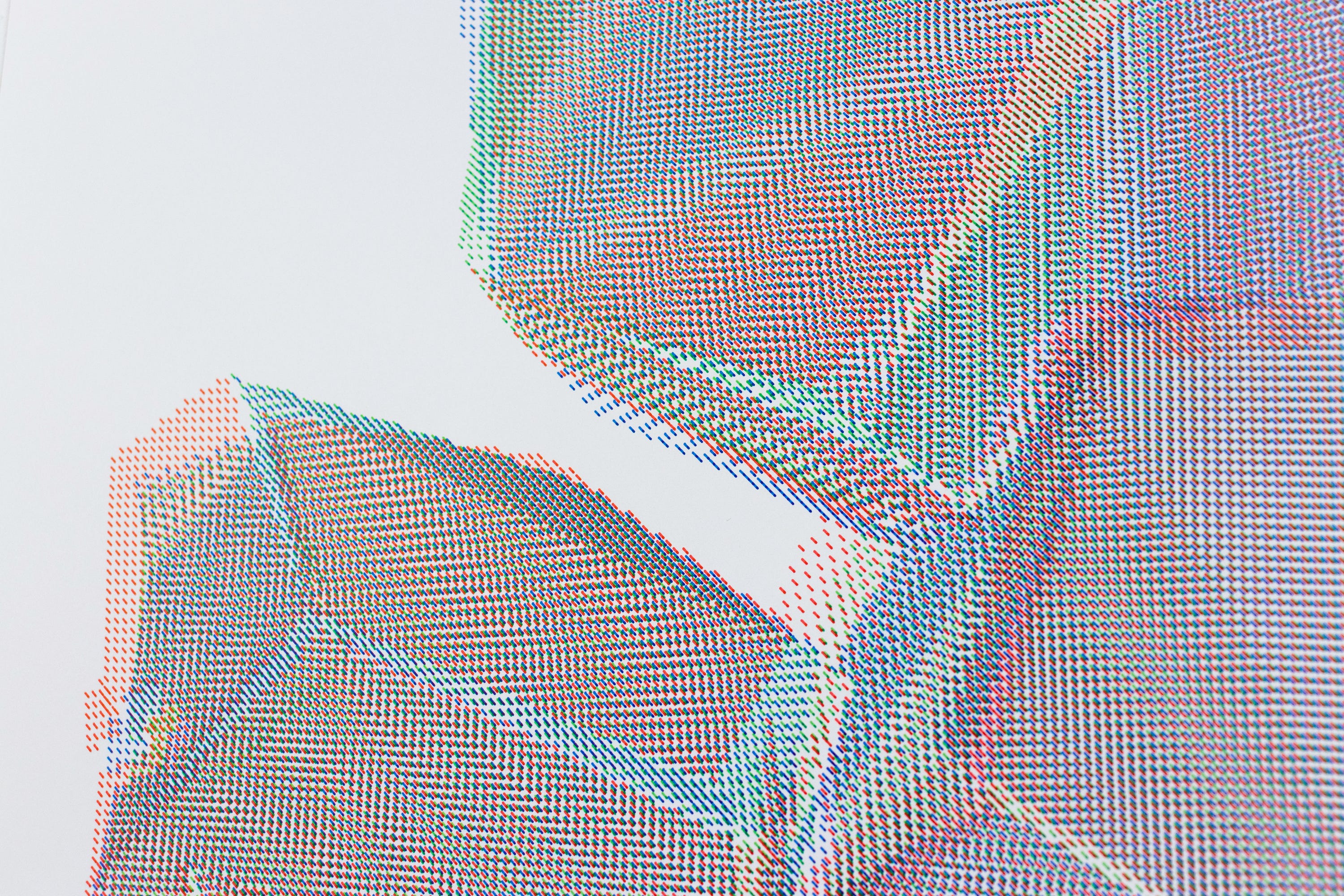
Throughout his decades-long practice and in these new works, Reas deconstructs the digital image into its smallest units so that we may (re)consider the logic behind the lines, pixels, and RGB colors that we so often take for granted.
As part of Ex Nihilo, the generative work also takes the form of five original plotter drawings on Bristol paper. To create these works, the same software that animates the work on a screen generates an SVG, which a plotter then draws, line by line, in ink. What reads as light against the black void of a screen becomes pigment on crisp white paper, with the small realities that come with it: accumulation, slight drag, and tiny imperfections. Whether on a screen or on paper, the invitation of Ex Nihilo is the same: Slow down long enough to notice what you’re actually looking at.
II. Two Platforms, One Exhibition
By Sean Moss-Pultz
If the work moves between screen and paper, the exhibition has to move with it.
I forget exactly when, but sometime in the early stages of planning this exhibition, it became obvious that the generative series should be minted on Art Blocks’ contracts. Art Blocks has built the strongest context for collecting generative work on-chain, and we wanted this series to live where that culture is strongest. With that in mind, we reached out, started talking, and now we’re presenting Casey’s first solo show on Feral File, the platform he co-founded with me almost exactly six years ago, together with Art Blocks. I can’t think of a more natural way to bring our communities together.
In the early days of Feral File, we experimented with auctions before switching to fixed-price exhibitions. Last year, though, Casey and I started thinking about auctions again because fixed pricing was forcing a strange task: choosing a price far in advance for a new work, then hoping that number still felt right when the show opened. But these works live on the internet and are secured by public blockchains. The contracts are code. It started to feel ridiculous that we were still pricing them using guesswork. So, we asked a different question: if the work is software, why isn’t the pricing? What mechanism can set a price we can stand behind—one that supports long-term stewardship for both artist and collector?
After discussing these ideas together, we later watched Art Blocks run ranked, uniform-price auctions. It was calm. As a collector, you could place your bid and walk away, and the price only needed to clear once. We loved it.
With this in mind, here’s how we’re running this exhibition:
How to Collect
The exhibition opens March 10 at 16:00 UTC (09:00 Los Angeles). There are two parts to the release: five plotter drawings and a long-form generative series. You can bid on the plotter drawings directly on Feral File. For the generative auction, we’ll route you to Art Blocks.
Ex Nihilo (Cosmos)
This long-form generative work is a series of 256 pieces minted on Art Blocks’ contracts. Explore the collection on Art Blocks. We’re using Art Blocks’ Ranked Auction Minter (RAM). During a fixed 24-hour window, collectors place bids publicly at any price at or above the minimum bid. When the window closes, the 256 highest bids win. All winners pay the same clearing price: the lowest winning bid. Unsuccessful bids are refunded.
SIMULACRUM (E-P-01)
SIMULACRUM (E-P-02)
COSMOS–SIMULACRUM–RGB–7105313-170-455
COSMOS–SIMULACRUM–RGB–7087313-353-371
COSMOS–SIMULACRUM–RGB–7135313-183-489
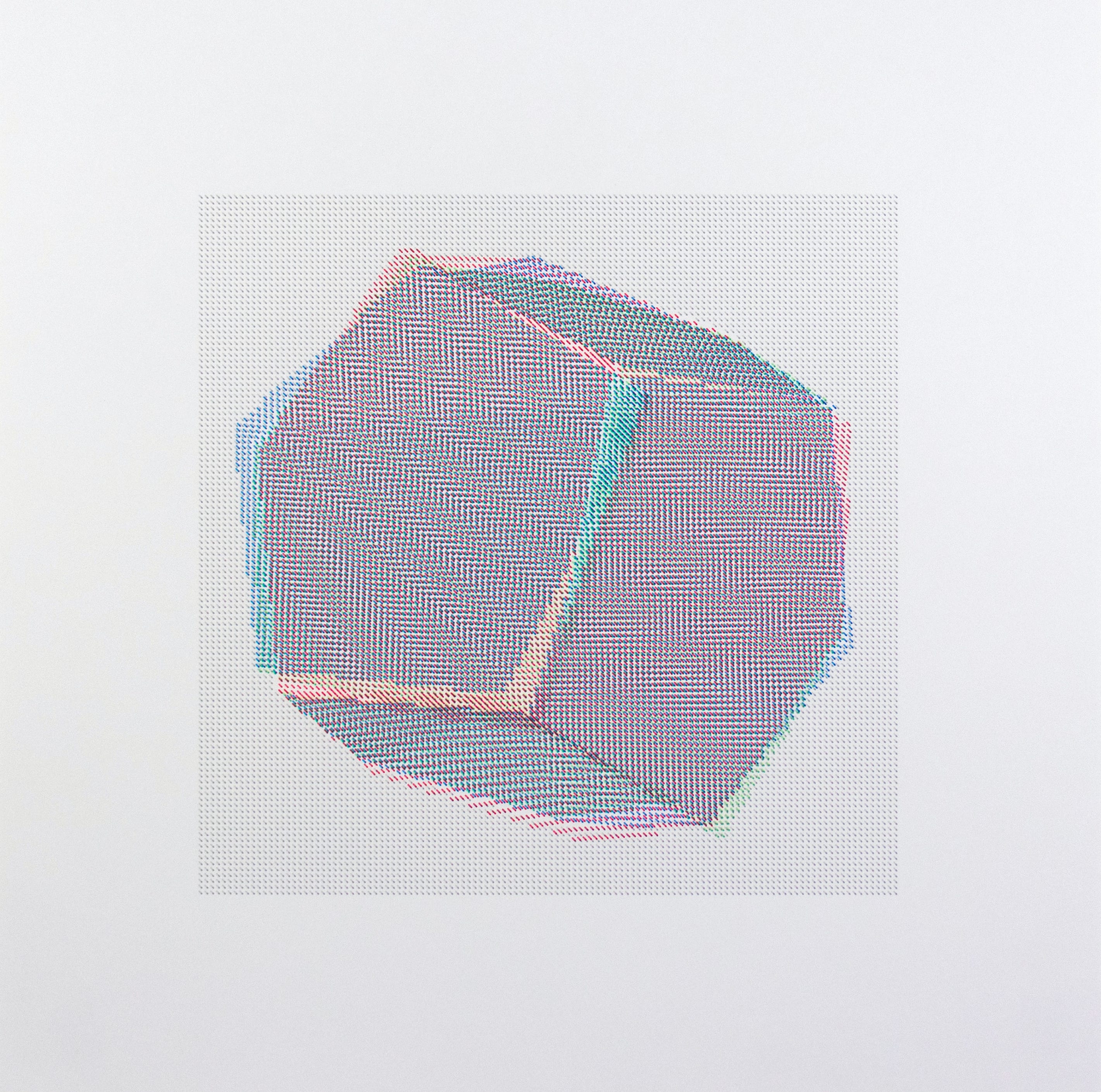
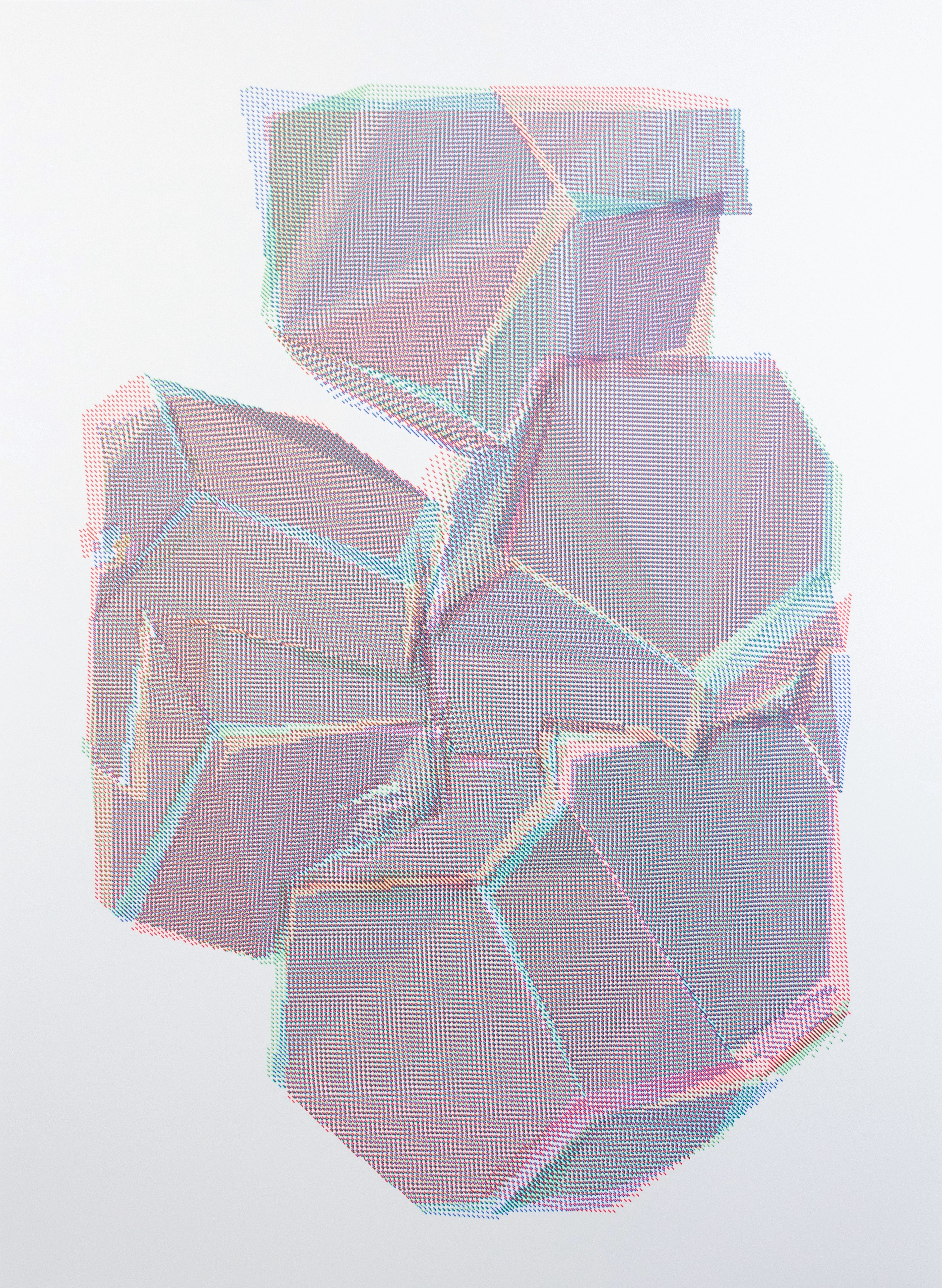
These are five original plotter drawings on Bristol paper. Each work is both a digital file and physical artwork. The digital file is the SVG (minted on Feral File contracts), and the physical artwork is the drawing on paper. The collector can receive both, or one can be archived by the artist. If a work is resold, the new collector will be entitled to both the digital file and physical artwork. Because there are only five drawings, and each one is meaningfully different, these will be collectible via English auctions, where bids increase in public until the bidding stops.